Iron Mountain, Federal Retirement Records, and Recent Move to Store Federal Government Pension Applications Online
The federal retirement process is undergoing significant changes in 2025. With the expiration of deferred resignation offers on September 30 or December 31, a notable influx of applications is expected from federal employees looking to retire. As the Office of Personnel Management (OPM) aims to streamline the retirement process, efforts are being made to digitize and store retirement records that have been historically housed in manual systems, often in underground facilities like the former limestone mine Iron Mountain in Boyers, PA . The goal is to enhance productivity and maximize the efficiency in processing of retirement claims, but with the complexity involved with some retirement paperwork cases might be difficult to overcome. This article will explore the history of the OPM process for retirement at Iron Mountain, the move to digitize application documentation, and how the new online retirement application (ORA) is no longer being rushed as the nation's federal retirement backlog is set to dramatically increase.
Estimate your FERS income with our Federal Pension Calculator.
The Abandoned Mine Shaft that Has Housed OPM Records for Retirement Since the 1970s
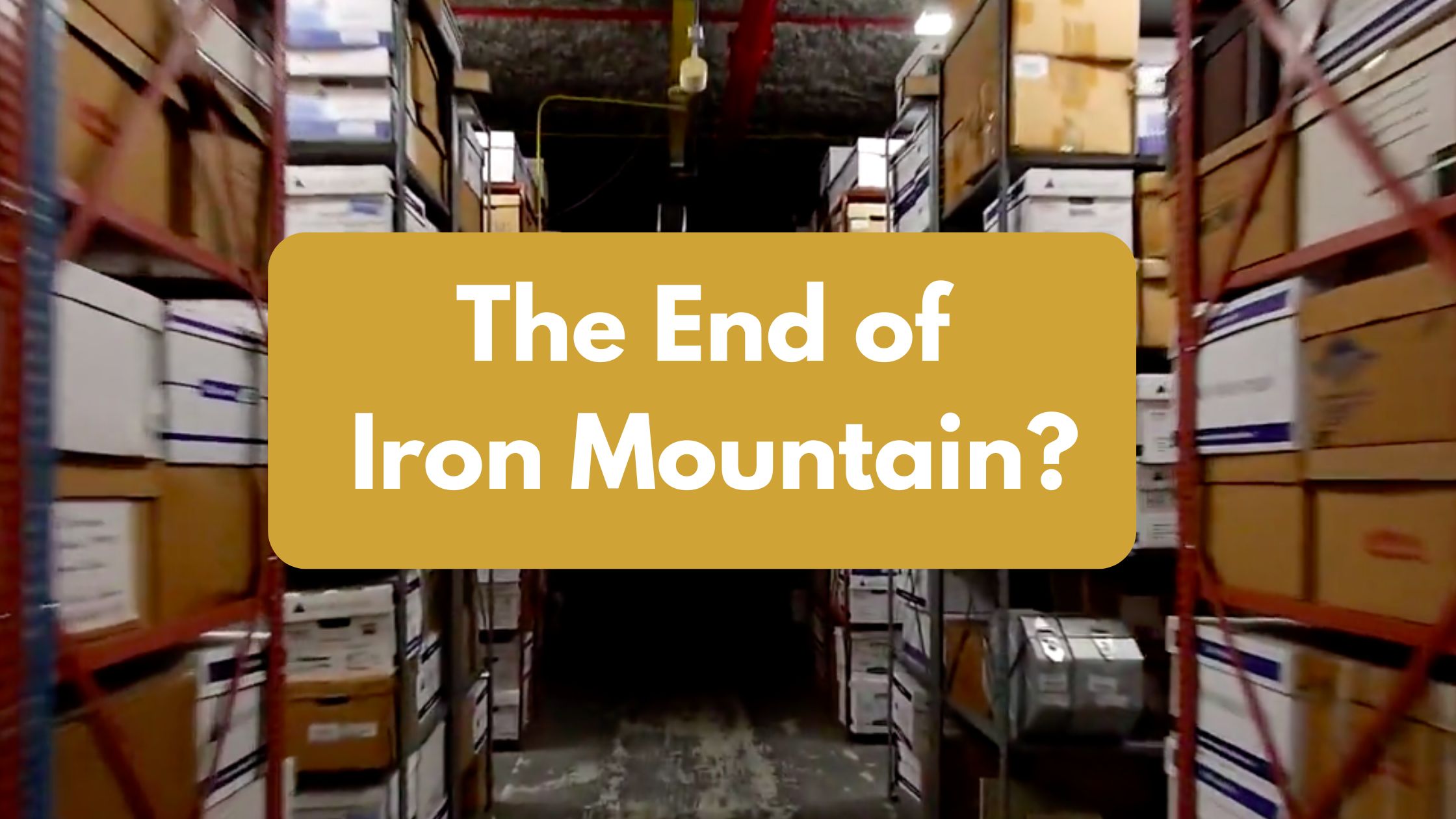
Iron Mountain provides secure storage solutions for OPM retirement records, ensuring that sensitive documents are preserved and protected, hundreds of feet underground in an abandoned limestone mine. Despite attempts to make the government's retirement process computerized in the 1980s and early 2000s, no software had a high enough success rate to fully move away from storing paper-based packets in a Pennsylvania mineshaft. Then, a few months ago, the Department of Government Efficiency (DOGE) asserted that the traditional systems wouldn't be able to handle the influx of retirement claims caused by Reductions in Force (RIFs) and the deferred resignation program (DRP) aka the Trump buyout offers. While the online system was set to start in June, the contract with Workday was canceled abruptly with the new goal of 2028 in place to move away from paper-based applications.
Retirement Benefits Application Process: A Brief History
The history of the current retirement process for federal employees started in 1955, when the mineshaft was converted into a storage facility and data center. The Office of Personnel Management (OPM) took over from the Civil Service Commission (CSC) in 1979, when all retirement applications starting be sent to Iron Mountain. During the 1980s, initial attempts at digitization were made to enhance the efficiency of processing retirement paperwork. The transition aimed to replace the manual handling of physical documentation, which posed challenges in retrieving retirement records and pension records, leading to significant concerns about transparency and accessibility. However, the new computer-based attempt at handing incoming claims failed. Another the 2000s, OPM aimed to further accelerate processes to decrease the backlog of retirement claims with a digital system. This attempt as well was unable to reduce the time needed for new retirees to receive their benefits. By 2025, the goal is to have a fully scalable system that utilizes artificial intelligence to manage unstructured data related to retirement claims. This shift promised to enhance customer satisfaction and maximize productivity within the office of personnel, but the $342,000 contract awarded to Workday was terminated by the Justice Department, once again stalling a digital transformation at OPM retirement services.
The Path Forward: Storing Records Digitally and Online Document Processing
With the Workday contract canceled, going to OPM's online retirement application portal now instructs workers within the federal government to reach out to their HR specialist to begin the retirement application process. The July 15th deadline is no longer in effect for submitting online, and an event on July 9th and 10th will be held to attract interested bidders for a federal contract to dramatically transform the way OPM stores data and ultimately make the timeline for handling FERS and CSRS pension claims faster.
Ready to retire? Attend a Free Online Federal Retirement Seminar!
OPM Backlog Expected to Inflate as More Civil Servants Apply for Retirement
Although the June data has yet to be released regarding incoming retirement applications and packet processing time, if the backlog data from May is any indicator, there will likely be another dramatic uptick of incoming claims. Because those who accepted a DRP buyout from the Trump administration and DOGE have until September 30 or December 31 to apply in order to override their resignation, many experts believe the amount of incoming retirement packets will continue on an upward trend. We will publish an article with the June backlog data as soon as it is available.
How Errors Stall Retirement Applications and How a Federal Employee Financial Advisor Can Help
When federal employees prepare to retire, the process can often be complicated by errors in the retirement paperwork. Missing information, incorrect calculations, and unstructured documentation can stall retirement applications, causing delays in accessing retirement benefits. This is a significant concern that persists within the federal government, particularly as many employees look forward to retiring in 2025. While reduced estimated payments are received until the application is fully processed, these are often 40 to 30 percent less than the actual monthly amount of the FERS pension. One error in a retirement claim can mean adding several months to the time it takes for OPM to finalize the packet, and this timeframe could be extended if there is a dramatic influx of incoming pension requests.
A federal employee financial advisorcan help ensure your application is error-free and you making the best possible decisions for your future financial goals.
We can assist in the following ways:
- Reviewing retirement paperwork to identify potential errors before submission.
- Providing tools such as a TSP investment calculator to help estimate benefits accurately.
- Offering insights into the digital transformation of retirement records and how to leverage technology for efficient claims processing.
- Guiding employees on the best practices for managing and tracking their retirement documents digitally.
- Helping to navigate the complexities of the retirement process within the federal government.